An End to the Creepy Rubber Hand
ARK
- posted on
- Comments Off on An End to the Creepy Rubber Hand
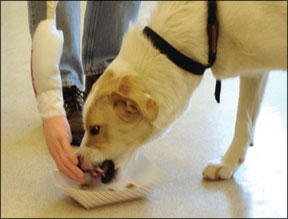
Despite years of study and anecdotal evidence disproving the efficacy of shelter behavior evaluations, numerous shelters still use outdated testing methods as the singular guide for determining the care of shelter animals, to include decisions of euthanasia.
How can pinching paws, taking away food, being petted by a fake hand, and meeting a stranger with an open umbrella possibly predict a dog’s behavior in a home environment? All this occurs in an already stressful situation, yet many animal shelters euthanize dogs for “failing” such tests.
The ASPCA’s position on shelter evaluations is clear: “Behavior assessments have not proven highly accurate or precise when used to predict aggression after adoption. It has been suggested that a significant number of dogs exhibiting aggression on an assessment do not do so in a home. For these reasons, the ASPCA maintains that euthanasia decisions should not be based solely on a dog’s behavior during an assessment or in any other single situation unless the aggression is egregious.*
Further, in December, 2022, the Association of Shelter Veterinarians (ASV) released a 2nd edition of their Guidelines for Standards of Care in Animal Shelters. In the update, ASV criticizes methods of behavior assessments in shelters based on two decades of work. “Studies have shown that behavior evaluation tests fail to reliably predict future behavior, particularly aggression, in a new home. Performing one stressful subtest after the next can negatively impact test results and the animal’s emotional well-being.”
After years of advocacy from organizations like ASV, many shelters are joining this attitude shift and changing their policies. They have modernized practices and no longer euthanize the problem away within a couple of days or weeks from intake. In keeping with the ASPCA’s position, some shelters are now using creative strategies from daily enrichment and field trips to training plans and volunteer programs. However, foster programs are the most important strategy for determining a dog’s true personality and temperament.
